
Optometrist in Wallsend
The Importance of Prescription Checks
At EyeMax EyeCare in Wallsend we carry out detailed optometry checks that allow us to review your overall eye health and determine whether your current prescription is still suitable for your day-to-day visual needs.
Many patients come to us when they begin noticing changes such as blurred vision, headaches, eye strain, squinting, difficulty reading fine print or reduced clarity when looking into the distance. These symptoms can indicate that the eyes are working harder than they should because the prescription no longer aligns with current visual demands.
During an assessment our optometrists review how well each eye is functioning, how your prescription has changed over time and whether any structural variations need further observation. We take into account lifestyle factors such as screen use, work environments and reading habits, as these often influence how comfortably you are able to use your eyes throughout the day.
If you are struggling with your current glasses or feel your eyes are working harder than usual, call (02) 4955 9950 to book an appointment.
Book an Appointment
Thank you for contacting EyeMax EyeCare.
We will be in touch soon.
Oops, there was an error sending your message.
Please try again later.
Frequently Asked Questions
What does an optometrist look for during an eye examination?
An optometrist evaluates several aspects of visual and ocular function. This can include measuring refractive error to determine whether lenses may be required, assessing how well the eyes coordinate and checking external features such as the cornea or eyelids for irregularities. Internal structures including the macula, optic nerve and retina are examined using specialised instruments or digital imaging systems. By combining information from these tests, the optometrist can form a detailed understanding of overall eye health and any changes that may need monitoring over time.
Can optometrists detect eye diseases?
Optometrists are trained to recognise clinical signs associated with a wide range of ocular conditions. They use diagnostic tools to examine internal eye structures where many changes first appear. Conditions affecting the retina, optic nerve or lens can often be identified during routine assessments, and the optometrist may recommend further monitoring or referral if a condition requires specialist input. This process ensures that any structural variations are assessed promptly using established clinical pathways.
Is it necessary to bring previous prescriptions to an appointment?
Bringing previous prescriptions can be helpful because it allows the optometrist to compare current findings with past measurements. Changes in refractive error over time provide useful insight into how vision is developing or adjusting. Although the optometrist can conduct a complete assessment without prior records, having them available adds context that can support more accurate interpretation of results. This is particularly useful for patients who have experienced frequent prescription updates or long-term monitoring.
The Prescription Check Process
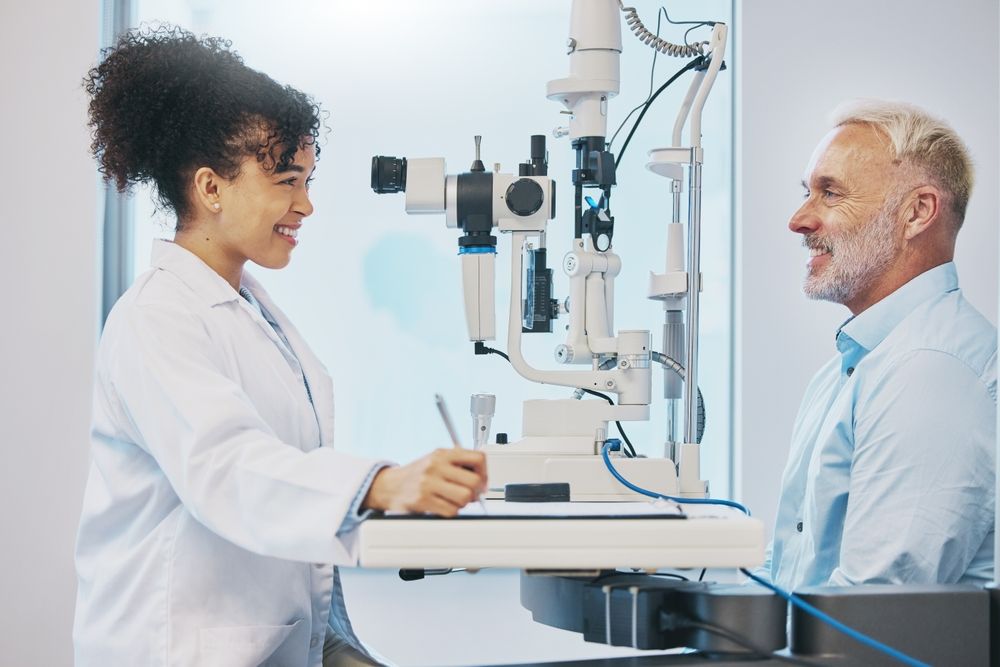
Our optometrists at EyeMax EyeCare take time and care when assessing your vision because an accurate prescription relies on both clinical measurement and your responses during testing. Prescription determination is a subjective process, which means you will be asked a series of yes or no questions to compare different lenses and describe which option offers better clarity. This part of the assessment works best when you are alert and able to concentrate, as your feedback helps us refine the prescription precisely.
During your visit we also look closely at your current glasses to understand how well they are supporting your visual demands. We assess whether there has been any change in clarity since your last appointment and review your past eye health records to identify long-term patterns that may influence the prescription.
We also consider your family history because certain eye conditions can have hereditary links that may affect monitoring requirements. Lifestyle factors play an important role too, as different tasks place different demands on your vision. For example, extended computer use, frequent driving or the need for Prescription Safety Glasses or Sport and Recreational Glasses can all influence the type of prescription that may be most suitable. If there are any issues present—such as dryness, eye strain or known eye conditions—we take these into account so the prescription is evaluated within the context of your overall ocular health.
This structured approach ensures we gather all the information needed to provide a clear and comprehensive understanding of your visual requirements.