
Macula Degeneration Test in Wallsend
Specialised Macula Assessments
Macula degeneration testing plays an important role in monitoring changes to central vision, and at EyeMax EyeCare in Wallsend we carry out structured assessments designed to evaluate the macula with precision and clarity. Our approach combines clinical imaging with functional testing so we can examine both the structure of the macula and the way it performs during visual tasks.
We use tools such as retinal photography, OCT scanning and visual grid checks, which allow us to review fine details that may not be visible during a standard examination. These tests help us document changes over time and provide patients with clear information about what is happening within the central retina. Our process is designed to be thorough, transparent and guided by industry-recognised procedures, ensuring each test is completed with accuracy and consistency.
If you would like to book a macula assessment or learn more about our testing methods, call
(02) 4955 9950.
Our results help build a clear picture of macula function and structure, supporting long-term monitoring and informed decision-making about eye health.
Book an Appointment
Thank you for contacting EyeMax EyeCare.
We will be in touch soon.
Oops, there was an error sending your message.
Please try again later.
Frequently Asked Questions
What is macula degeneration testing and why is it important?
Macula degeneration testing is a collection of assessments designed to evaluate the health and function of the macula, which is the part of the retina responsible for central vision. These tests often include OCT scans, retinal photography and functional checks that assess clarity and distortion. Macula degeneration may begin with subtle changes that are not always noticeable in daily activities. Testing provides a baseline so future changes can be monitored with greater accuracy. Early structural changes can often be documented before visual symptoms appear, which is why routine macula assessments are recommended for people at higher risk.
Who should consider macula degeneration testing?
Macula degeneration testing is commonly recommended for individuals over the age of 50, people with a family history of AMD and those with lifestyle or health factors that may increase risk. These include smoking history, prolonged UV exposure or certain systemic conditions. Anyone who notices distortion, blurred central vision or difficulty reading may also benefit from testing. Even without symptoms, routine assessments can be valuable because structural changes can occur gradually. Monitoring allows changes to be tracked so they can be reviewed over time with more precision.
How often should macula degeneration tests be performed?
The recommended frequency depends on age, risk level and whether any macular changes have already been documented. People with no risk factors may only require occasional testing, while those with early signs of macula changes may need more frequent assessments to track progression. OCT and retinal photography provide clear comparisons from visit to visit, making them useful for ongoing monitoring. The timing of follow-up tests is usually based on clinical findings, symptoms or changes observed in previous images.
How We Test the Macula
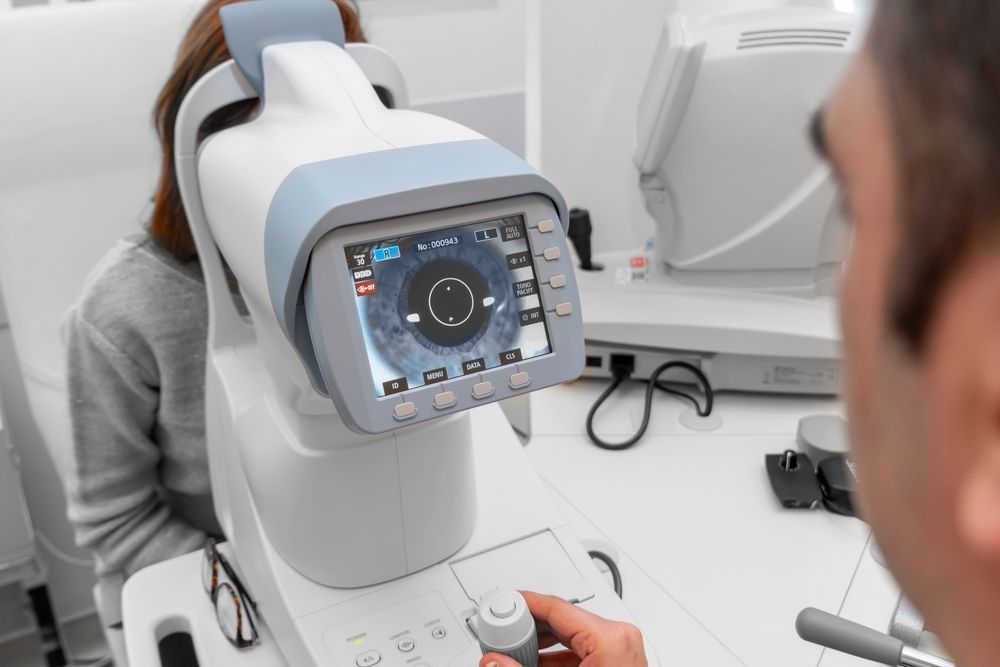
Our macula degeneration testing process includes a series of steps designed to capture detailed information about the central retina. We begin with high-resolution imaging using OCT, which provides cross-sectional scans of the retinal layers. These scans help identify thickness changes, fluid presence or disruptions in macular structure.
Retinal photography is then used to document surface detail and pigment patterns in the macula, providing a visual record for future comparison. We may also perform visual function checks that look at distortion, contrast sensitivity or central clarity, depending on the patient’s symptoms or risk factors.
Each assessment is explained clearly so you understand what is being measured and how the results contribute to the overall analysis. We review the images together to discuss any changes that may require monitoring. Our structured approach ensures each test is completed with accuracy and consistency for ongoing review.
Advantages of our macula tests:
- High-resolution macula imaging
- Clear visual function assessment
- Consistent long-term monitoring