
Children's Eye Tests in Wallsend
Child-Focused Eye Examinations
Children’s vision develops rapidly, and early testing plays a valuable role in identifying changes that may influence learning, comfort or visual development.
At EyeMax EyeCare in Wallsend we carry out structured children’s eye tests designed to assess clarity, coordination and how the eyes work together during tasks such as reading and screen use. Our testing methods are tailored to younger patients, using age-appropriate tools like picture charts, focusing assessments and binocular vision checks.
We also evaluate depth perception, eye movement control and prescription needs so we can build a complete understanding of how a child’s visual system is functioning. Our team explains each step clearly using calm, supportive language to help children feel comfortable throughout the appointment. These assessments allow us to monitor development over time and document changes that may require follow-up.
To book a children’s eye test or ask questions about the process, call
(02) 4955 9950.
Consistent testing supports early recognition of visual changes and creates a reliable baseline for future comparison.
Book an Appointment
Thank you for contacting EyeMax EyeCare.
We will be in touch soon.
Oops, there was an error sending your message.
Please try again later.
Frequently Asked Questions
When should a child have their first eye test?
Most children benefit from having their first eye test before starting school, although testing can begin earlier if concerns arise. Vision develops significantly during early childhood, and delays in detecting issues can sometimes affect confidence or comfort during tasks that require sustained focus. Testing before school provides a baseline for future comparison and ensures that clarity, alignment and visual coordination are functioning as expected for developmental age. Children who show signs of squinting, holding books very close or avoiding visual tasks may need testing sooner. Routine assessments support consistent monitoring as a child grows.
How do children's eye tests differ from adult eye tests?
Children’s eye tests use methods tailored to developmental stages and attention levels. Instead of standard letter charts, younger children may use picture-based or symbol-based acuity tests. Binocular vision checks assess how well the eyes work together, which is especially relevant for reading and early learning. Focusing tests, eye tracking assessments and depth perception evaluations are also common. The testing environment is usually calmer and more interactive to help children feel at ease. While adult testing focuses heavily on prescription accuracy and disease detection, children’s testing places equal emphasis on visual development and functional skills.
What signs might suggest that a child needs an eye test?
Signs that may indicate a child needs an eye test include frequent rubbing of the eyes, squinting, sitting very close to screens or holding books close to the face. Some children may avoid reading or complain of headaches after visual tasks. Others may lose their place while reading or show reduced coordination during activities that require precise visual guidance. These signs can relate to clarity, focusing ability or binocular vision. Because children do not always recognise vision difficulties, behavioural patterns often provide early clues. Testing helps determine whether underlying visual factors are contributing to these challenges.
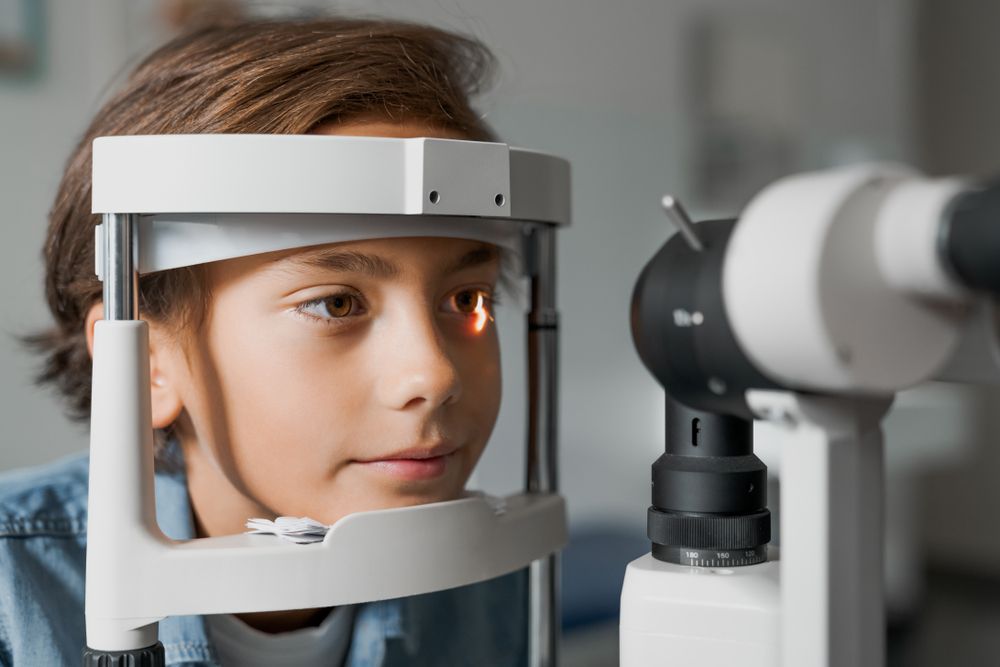
How We Test Children's Vision
Children’s eye tests include a range of assessments designed to evaluate vision accuracy and visual development.
We begin with age-appropriate acuity testing to measure how clearly a child sees at different distances. We then perform refraction to determine whether a prescription is needed or if existing lenses require review. Binocular vision tests assess how well the eyes work together, while focusing tests help evaluate performance during reading or screen tasks. We also check eye alignment, tracking ability and depth perception because these skills influence comfort and visual endurance.
For younger children we adjust our methods to suit attention span and developmental stage, using visual targets and interactive tools. Throughout the appointment we provide explanations that help parents understand results and what will be monitored in future visits.
Advantages of our children's eye tests:
- Age-appropriate visual development checks
- Clear communication for parents
- Structured long-term monitoring